


Understanding the Core Differences and Applications of PTFE/PFA/FEP Fluoroplastics in One Article
2026-04-21浏览量:1
Fluoropolymers have become key materials in industrial manufacturing due to their excellent chemical resistance, high temperature tolerance, and insulating properties. Among them, PTFE, PFA, and FEP are the three most widely used categories. Although they all belong to the fluoropolymer family, they differ significantly in structure, performance, and application scenarios. Precisely distinguishing their characteristics is crucial for industrial selection. The following text analyzes the differences and applications of these three materials from three aspects: core performance, processing characteristics, and suitable fields.
PTFE (Polytetrafluoroethylene)
The Basic Category of Fluoroplastics
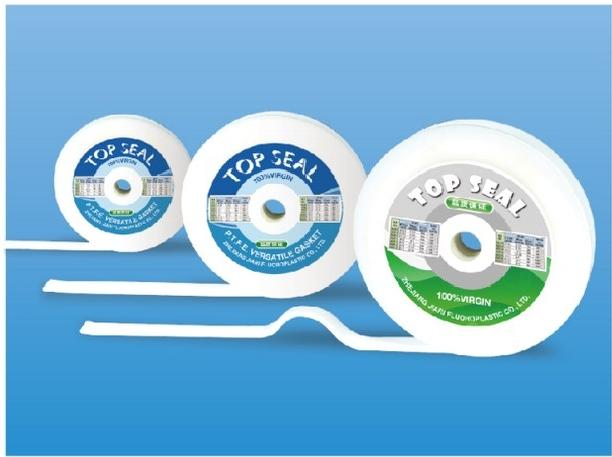
With a stable molecular structure, PTFE offers long-term use at temperatures up to 260°C and maintains toughness at temperatures as low as -200°C. It resists strong acids, strong bases, and organic solvents while featuring an extremely low coefficient of friction, earning it the title "King of Plastics." However, PTFE has extremely high melt viscosity and cannot be injection molded; it can only be processed through compression molding, sintering, and other techniques. Once formed, it is difficult to further process and is primarily manufactured into sheets, rods, seals, and other basic products. PTFE is widely used in chemical anti-corrosion linings, mechanical seals, non-stick coatings, electrical insulation components, and other applications, making it a core material for industrial infrastructure.
FEP (Fluorinated Ethylene Propylene)
A Modified Version of PTFE
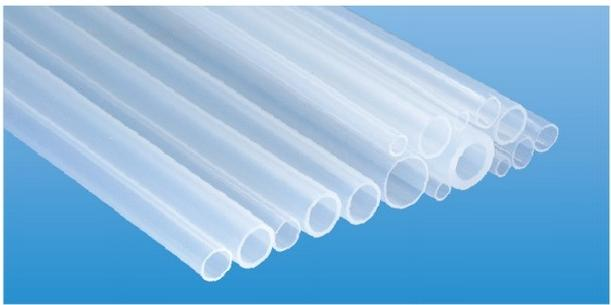
FEP retains PTFE's corrosion resistance and high-temperature characteristics, with a long-term use temperature of 200°C, while solving the melt processing challenge. It can be injection molded, extruded, and blow molded, offering excellent formability along with good light transmission and electrical insulation properties. However, FEP has slightly lower temperature resistance than PTFE and somewhat weaker mechanical strength. It is mainly used to manufacture electrical wire insulation, chemical piping, heat shrink tubing, films, and other products, and is widely applied in electronics, telecommunications, chemical fluid transfer, instrument packaging, and other fields.
PFA (Perfluoroalkoxy Alkane)
A Premium Fluoroplastic Category
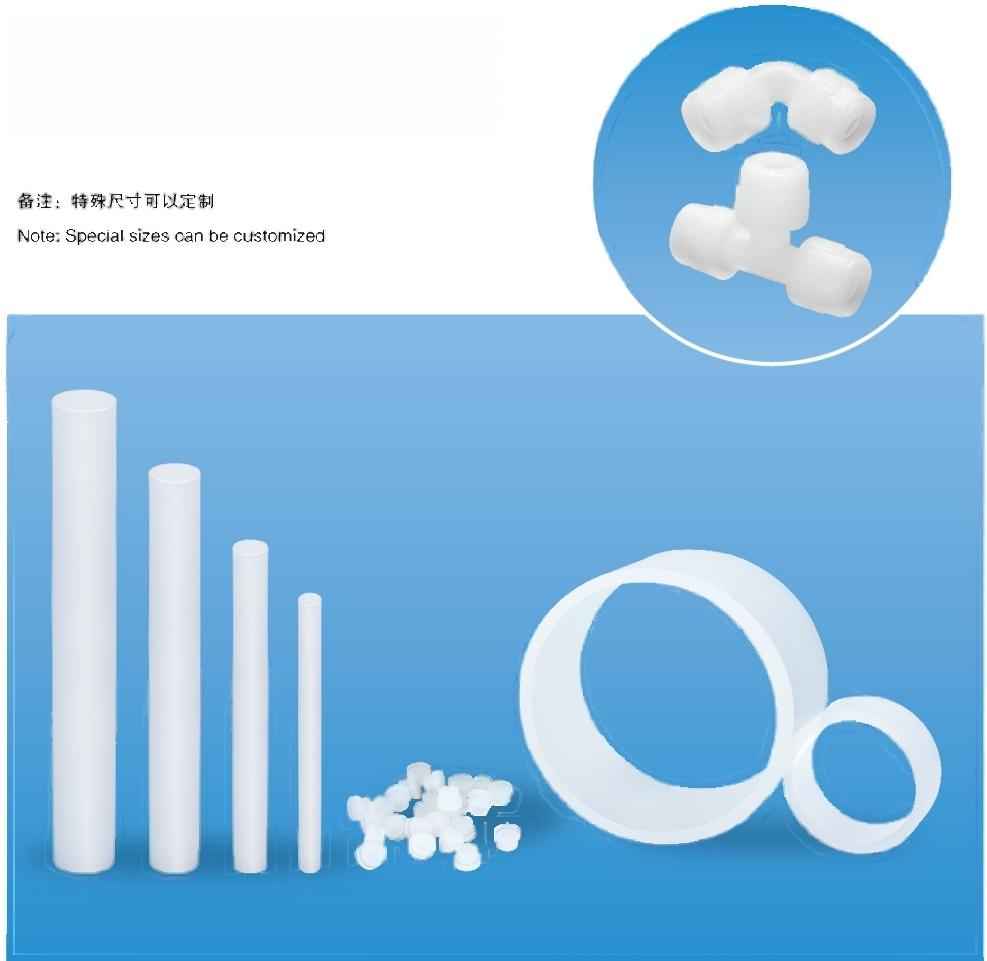
PFA combines PTFE's high performance with FEP's processability. It has a long-term use temperature of 260°C, with corrosion resistance and insulation properties comparable to PTFE. It can be melt-processed through injection molding and extrusion, offers high molding precision, and has better stress crack resistance than the other two materials. It can also be made into transparent products. Its main drawback is higher cost, positioning it as a premium category among fluoroplastics. PFA is primarily used in fields with stringent material requirements such as semiconductor chip manufacturing, aerospace, high-end medical applications, and new energy sectors, including semiconductor etching equipment components, aviation hydraulic pipes, and medical sterile tubing.
Summary of Key Differences:
PTFE offers optimal performance but limited processing capabilities, making it ideal for basic industrial applications with high requirements. FEP provides good processability and value, suitable for general high-end manufacturing. PFA is a versatile high-performance material focused on high-end precision manufacturing. Together, these three materials form an application gradient from basic to premium, covering a wide range of industrial needs.
Zhejiang Jiaxiang Fluoroplastics Co., Ltd. specializes in fluoroplastic processing, focusing on the modification and product manufacturing of PTFE, PFA, FEP, and other fluoromaterials. The company customizes products such as sheets, seals, and high-end precision components according to customer requirements, suitable for chemical, semiconductor, aerospace, new energy, and other sectors. The company stays at the forefront of industry technology trends, providing highly compatible fluoroplastic products through strict quality control and customized solutions, establishing itself as a premium supplier in the fluoroplastic processing field.
Some content is reposted from the internet. Copyright belongs to the original authors. If infringement occurs, please contact us for removal. Content involving franchising or investment carries risks - exercise caution when making decisions.
